Nova Scotia, New Brunswick & PEI
ErgonomicsConsulting
Services that help your people work pain-free and get injured employees back to work safely.
By the time it's a claim, you've already paid for it.
Musculoskeletal injuries build quietly, over months or years, before anyone reports anything. A claim tells you about a problem once the cost and the pain are already locked in.
We have tools that will flag those issues early, while they're still cheap to fix.
Share of 2025 time-loss claims that were sprains, strains, and tears
Sources: WCB Nova Scotia 2025 Impact of Workplace Injury Report, WCB PEI 2025 claim statistics, WorkSafeNB.
Musculoskeletal injury is the single largest category of workplace injury in every Maritime province.
It's already your responsibility.
Ergonomic risk sits squarely inside your existing OHS duty. It's also the injury category most likely to produce your next claim, which makes it the cheapest one to get ahead of.
Section 13(1)(a) of Nova Scotia's Occupational Health and Safety Act requires every employer to take every precaution that is reasonable in the circumstances to protect the health and safety of people at the workplace.
In Nova Scotia this is not an interpretation. The Workplace Health and Safety Regulations name ergonomic agents directly, alongside acoustic, mechanical, and thermal ones.
Section 9 of New Brunswick's Occupational Health and Safety Act sets out the general duties of every employer, including taking every reasonable precaution to protect the health and safety of employees at work.
Section 12(a) of Prince Edward Island's Occupational Health and Safety Act requires an employer to ensure that every reasonable precaution is taken to protect the occupational health and safety of persons at or near the workplace.
"We already bought ergonomic chairs."
A chair is one variable. The best chair in the world, set up wrong or paired with a monitor at the wrong height, still hurts.
"We can't afford sit-stand desks for everyone."
You were never going to need them for everyone. You need the right equipment for the few who do, identified before you spend.
"A few people complain, but most are fine."
Complaints are not the problem. They are the data, and they arrive free and early.
Wide and cheap first. Intensive only where it counts.
Most vendors sell everyone the same thing, either furniture for the whole floor or a one-on-one assessment for the whole floor. Both are expensive, and both spend the most money on the people who needed the least help. We start wide and cheap, find out where the real risk sits, and escalate only the people who genuinely need more.
Surveys
EveryoneInventory comfort, track trends, find the hotspots before an injury.
Training & quick check-ins
Most peopleFoundations, then a two to five minute check that each workstation is right.
Personalized coaching
Persistent discomfortThirty minutes for persistent discomfort, ending with a takeaway checklist.
Full assessment
The few complex casesReserved for complex cases, before any significant purchase.
Ergonomics is not one-and-done. The same approach that prevents an injury is what gets an injured employee back to work safely, which is why this works as an ongoing relationship rather than a one-time visit.
Equipment consultations
A second opinion before you buy chairs, desks, keyboards, or monitors. This alone can save tens of thousands in avoided over-purchasing.
Return to work accommodations
Work related or not. Often a phone call reviewing the functional requirements of the role is enough.
Pricing on inquiry, scoped to what the survey finds.
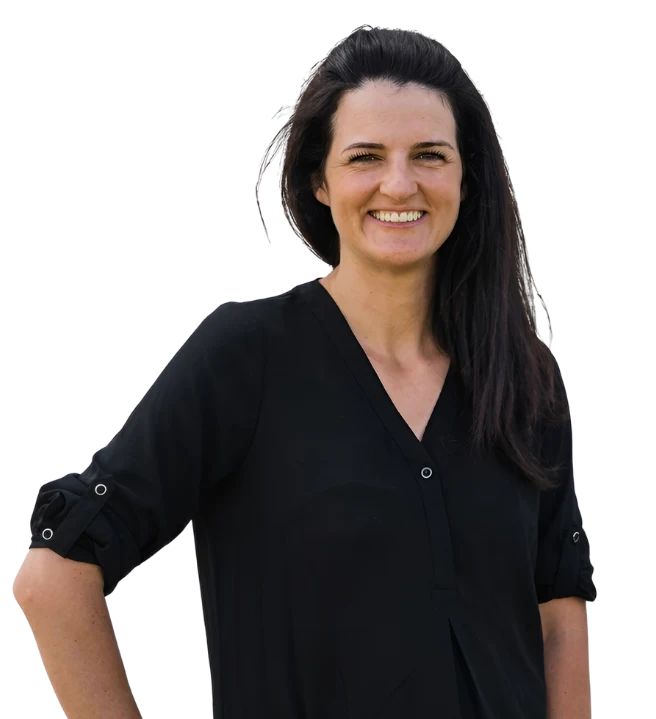
Darcie Jaremey, MSc, CPE
Darcie has spent two decades assessing workplaces and coaching employers through exactly the kind of triage this page describes: start cheap and wide, find the real risk, and escalate only where it counts. Every survey, training session, and assessment is delivered personally, not handed off to a junior associate or a generic template.
Find out where your risk actually is.
Tell us a bit about your workplace. Darcie reads every message personally and will reply with what the right first step looks like for you, whether that's a survey, a training session, or something narrower. No obligation, and no pressure to buy equipment.